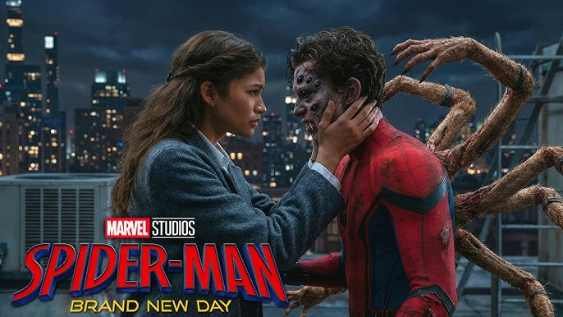
Four years after Peter Parker was erased from the memory of everyone he loved, Spider-Man is finally coming back to theaters with a story that picks up exactly where that heartbreaking ending left off. Spider-Man: Brand New Day is one of the most anticipated Marvel releases of 2026, and after a record-breaking trailer debut, it has quickly become one of the biggest conversations in Hollywood this summer.
Release Date: When Does Spider-Man: Brand New Day Come Out?
Spider-Man: Brand New Day swings into theaters on July 31, 2026. The film was originally dated a week earlier, July 24, but Sony pushed it back slightly to create some breathing room away from the IMAX release window of another major 2026 tentpole, The Odyssey. This is the fourth solo outing for Tom Holland’s Peter Parker, and it marks the character’s first big-screen appearance since Spider-Man: No Way Home in 2021 — making this one of the most highly anticipated superhero sequels in years simply due to how long fans have waited.
The Story: What Is Brand New Day About?
The premise picks up on the emotional gut-punch that closed out No Way Home. At the end of that film, Doctor Strange’s spell erased every memory of Peter Parker from the minds of everyone who knew him, including his closest friends and the love of his life. Brand New Day tells the story of what happens next: a forgotten hero forced to rebuild everything from scratch — his identity, his relationships, his homemade gear, and even his sense of purpose — with no one around who remembers who he used to be.
This “rebuilding from nothing” angle gives the film a different emotional texture than previous entries in Holland’s trilogy. Rather than leaning on established relationships, the story explores isolation, reinvention, and what it means to be a hero when nobody around you knows your history or your sacrifices. It’s a bold narrative choice for a franchise this large, and it has generated plenty of discussion among fans about how deep the film will go into Peter’s emotional isolation before letting him rebuild those connections.
Cast: Who’s Returning and Who’s New?
Tom Holland returns for his fourth solo outing as Peter Parker, alongside Zendaya as MJ. Given Zendaya’s busy schedule in 2025, which included the third season of Euphoria and filming for Dune: Part Three, some early speculation suggested her role in Brand New Day might be reduced. However, both she and Jacob Batalon, returning as Ned Leeds, feature prominently in marketing materials, suggesting their characters still play a meaningful role in the story — even if Peter may not immediately be able to restore their memories of their history together.
The film also brings in some major new additions to the cast. Sadie Sink, known for her breakout role in Stranger Things, joins the film in a role that has fueled extensive fan speculation, with many guessing she could be playing a character connected to Peter and MJ’s future, though this remains unconfirmed.
Perhaps the biggest cast addition is Jon Bernthal, reprising his role as the Punisher, Frank Castle. Bernthal became a fan favorite in the character after his debut in Netflix’s Daredevil series back in 2016, and this marks his first appearance as the Punisher on the big screen. His inclusion brings a much darker, grittier edge to the film, and pairing his street-level brutality with Holland’s more idealistic version of Spider-Man has already generated significant excitement among longtime Marvel fans.
Mark Ruffalo also appears as Bruce Banner, also known as the Hulk, directly tying Brand New Day into the larger Avengers storyline heading toward Avengers: Doomsday later in the year. Michael Mando returns as Mac Gargan, also known as Scorpion, a character first set up years earlier in Spider-Man: Homecoming, finally paying off a plot thread that has been hanging since 2017. Additional cast members include Tramell Tillman, Liza Colón-Zayas, Marvin Jones III as Tombstone, Eman Esfandi, Keith David, and Zabryna Guevara.
Director and Creative Team
Brand New Day is directed by Destin Daniel Cretton, best known for helming Shang-Chi and the Legend of the Ten Rings. His arrival marks a shift in creative direction for the Holland-led Spider-Man films, which were previously directed by Jon Watts across the Homecoming trilogy. Behind the scenes, longtime series writers Chris McKenna and Erik Sommers return, having written all three prior MCU Spider-Man films, providing some creative continuity even with a new director at the helm.
Producers include Marvel Studios head Kevin Feige, alongside Amy Pascal and Avi Arad, both longtime stewards of the cinematic Spider-Man franchise since its earliest days. Composer Michael Giacchino returns to score the film, continuing his work across the trilogy, while Brett Pawlak serves as cinematographer.
The Record-Breaking Trailer
When the first trailer for Brand New Day dropped on March 18, 2026, it made headlines almost immediately. According to Sony, the trailer drew an astonishing 718.6 million views within its first 24 hours, eventually surpassing 1.1 billion views within four days — numbers that place it among the most-watched movie trailers ever released. That kind of reception underscores just how much goodwill Holland’s version of Spider-Man still carries with global audiences, even years removed from his last big-screen appearance.
The trailer’s focus on Zendaya and Jacob Batalon’s characters has been read by many fans as a signal that their roles remain significant, even amid the emotional fallout of the memory-erasing spell from the previous film.
Runtime and Technical Details
Spider-Man: Brand New Day is expected to run around 2 hours and 24 minutes, based on current runtime trackers, which would make it one of the longest films in the character’s cinematic history. Some early listings briefly suggested a runtime closer to two and a half hours before settling closer to 144 minutes. Whatever the final number ends up being, it signals a story with considerable scope, consistent with the film’s ambition to rebuild Peter’s entire world from the ground up.
How Brand New Day Connects to the Larger MCU
This film does not exist in isolation. It is positioned as a direct lead-in to Avengers: Doomsday, releasing later in the year on December 18, 2026. Marketing has suggested that Brand New Day may tease Doctor Doom’s arrival or hint at alliances forming ahead of that ensemble event, even though Pedro Pascal previously indicated the film is meant to kick off an entirely new trilogy for Peter Parker. This creates an interesting tension: how can Brand New Day launch a self-contained new story arc while also serving as connective tissue for one of the biggest crossover events in Marvel history? Fans will not have a clear answer until the film actually reaches theaters.
The appearance of Mark Ruffalo’s Hulk further reinforces these connections, suggesting that Peter’s story, despite its more personal and isolated framing, will not be entirely disconnected from the wider Avengers narrative building toward December’s release.
Why This Movie Matters
Spider-Man remains one of the most consistently beloved characters in the entire Marvel Cinematic Universe, and Holland’s take on the character has anchored some of the franchise’s most emotionally resonant and commercially successful films, including No Way Home, which became one of the highest-grossing movies in franchise history. Brand New Day carries the weight of continuing that legacy while also taking real creative risks with its “rebuilding from nothing” premise.
Add in the introduction of fan-favorite characters like the Punisher, the long-awaited payoff of Scorpion’s storyline, and direct ties to the larger Phase Six narrative, and this film has all the makings of one of the most significant Spider-Man releases yet.
Should You Watch Spider-Man: Brand New Day?
For longtime Marvel fans, this is an easy must-watch. The emotional stakes established at the end of No Way Home give this film a genuinely compelling hook, and the combination of a new director, a fresh trilogy structure, and major new characters like the Punisher suggests Sony and Marvel are trying to push the character in new creative directions rather than simply repeating old formulas.
Even casual fans who haven’t kept up with every corner of the MCU will likely find plenty to enjoy here, thanks to the film’s grounded, character-driven premise. You don’t need to have memorized years of continuity to understand a story about a hero forced to start over — that’s a universally relatable idea, and it’s likely a big part of why the trailer resonated so strongly with such a massive global audience.
Where to Watch
Spider-Man: Brand New Day opens in U.S. theaters on July 31, 2026. As of now, no streaming release date has been announced, so audiences eager to avoid spoilers on social media should plan on catching this one in theaters during its opening weeks.
Comparing Brand New Day to Holland’s Previous Spider-Man Films
Each film in Holland’s Spider-Man trilogy has had a distinct emotional flavor. Homecoming was a lighthearted coming-of-age story about a teenager trying to prove himself. Far From Home dealt with grief and identity in the wake of Tony Stark’s death. No Way Home became a sprawling multiversal event that closed out the trilogy on a note of profound personal loss. Brand New Day appears to be charting new territory yet again, this time focusing on isolation and reinvention rather than external threats alone.
This evolution matters because it shows Sony and Marvel are willing to let the character mature rather than resetting him back to a familiar status quo. Losing every relationship that grounded him, only to have to rebuild trust and connection from nothing, gives Holland new emotional material to work with after four films in the role. Early reactions to the trailer suggest audiences are responding well to this shift, with many longtime fans praising the decision to let consequences from No Way Home actually shape the next chapter instead of quietly walking them back.
What Critics and Fans Are Predicting
While reviews won’t be available until closer to release, early buzz suggests this could be one of the more emotionally grounded entries in the character’s cinematic history, closer in tone to the more personal stakes of Homecoming than the multiversal spectacle of No Way Home. The introduction of the Punisher, a character known for operating in a much darker moral register than Spider-Man, has also fueled speculation about whether Brand New Day will explore heavier themes around justice, vengeance, and how far a hero like Peter Parker is willing to go under pressure.
Fan theories about Sadie Sink’s role continue to circulate widely, with some suggesting a connection to Peter and MJ’s future together, while others believe she could be playing an entirely new character introduced specifically for this new trilogy. Marvel has stayed quiet on the specifics, which has only fueled more speculation in the lead-up to release.
Final Thoughts
Spider-Man: Brand New Day arrives with enormous expectations, backed by a record-shattering trailer debut, a fresh directorial vision, and a story that promises real emotional stakes rather than simply continuing where things left off. With new characters like the Punisher joining the fold and direct ties to the upcoming Avengers: Doomsday, this is shaping up to be one of the defining Marvel releases of 2026.