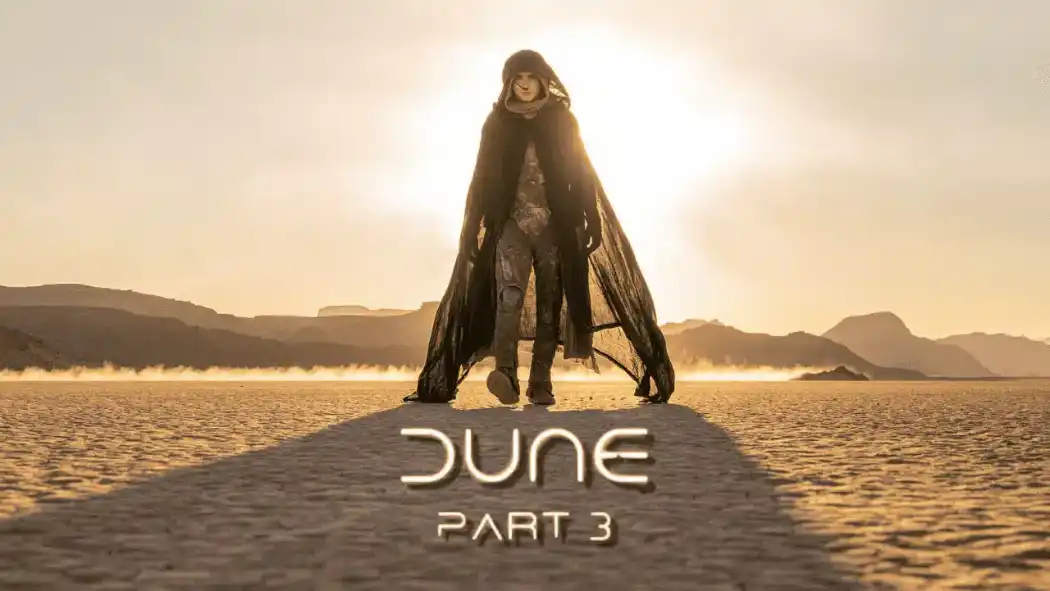
Denis Villeneuve’s epic science-fiction trilogy is finally reaching its conclusion. Dune: Part Three has been dubbed “the epic conclusion” of the acclaimed director’s adaptation of Frank Herbert’s saga, and after the massive critical and commercial success of Dune: Part Two, expectations for this final chapter could not be higher. With a release date now locked in and a trailer that has already broken through the noise of a packed 2026 movie calendar, this is shaping up to be one of the most important films of the year.
Release Date: When Does Dune: Part Three Come Out?
Dune: Part Three is set to hit theaters on December 18, 2026, playing exclusively in cinemas and IMAX. That release date happens to fall on exactly the same day as another 2026 blockbuster giant, Avengers: Doomsday, setting up a box-office showdown that industry insiders have already nicknamed “Dunesday.” Whether one of these two massive films eventually shifts its date to avoid the clash remains uncertain, but as of now, moviegoers in December will have to choose between two of the year’s biggest cinematic events on the very same weekend.
Production on the film wrapped ahead of schedule back in November 2025, having begun filming in mid-to-late summer of that year. So far, the production has stayed on schedule with no reported delays, which bodes well for the film hitting its planned release date without complications — something not always guaranteed with a project of this scale.
The Story: What Is Dune: Part Three About?
Dune: Part Three is based on Dune Messiah, Frank Herbert’s 1969 follow-up novel to the original Dune. The story is set nearly two decades after the events of Dune: Part Two, picking up with Paul Atreides now firmly established as Emperor of the known universe. Rather than continuing the survival-and-rebellion narrative that defined the first two films, this installment shifts its focus toward the loneliness and moral compromises of absolute power.
As Emperor, Paul now possesses more power than any single person was ever meant to wield, and the film is expected to explore the personal and political cost of that power. Villeneuve has been open about wanting to take a different tonal approach for this chapter, much as Herbert did when he wrote Dune Messiah as a deliberate subversion of the heroic arc he built in the first novel. Villeneuve explained that the story takes place twelve years after where audiences left the characters at the end of Part Two, and lead actor Timothée Chalamet has hinted at a “nice character shift” for Paul in this new chapter, suggesting the film will complicate the audience’s relationship with a character many have come to see as a straightforward hero.
This shift matters because Dune Messiah has long been considered one of the more challenging and subversive entries in Herbert’s original saga, deliberately undercutting the mythic, chosen-one framing built up across the earlier story. Fans of the books know that this installment is where the narrative starts asking harder questions about the dangers of charismatic leadership and the human cost of prophecy fulfilled — themes that feel especially resonant for a modern audience.
Cast: Who’s Returning and Who’s New?
The film brings back the core ensemble that made the first two Dune films such a massive success. Timothée Chalamet returns as Paul Atreides, now navigating life as Emperor, while Zendaya reprises her role as Chani, Paul’s Fremen partner. Rebecca Ferguson returns as Lady Jessica, and Javier Bardem comes back as Stilgar, continuing one of the trilogy’s most beloved supporting relationships.
Among the most significant returning cast members is Anya Taylor-Joy, who is expanding her presence in this installment as Alia Atreides, Paul’s sister — a character whose role grows substantially in the Dune Messiah storyline compared to her brief appearance at the end of Part Two. This expanded role has generated considerable excitement among book readers, since Alia’s arc is central to much of the political intrigue that defines Herbert’s second novel.
The film also introduces major new additions to the cast. Robert Pattinson joins as a new villain named Scytale, whose first look arrived in the film’s initial teaser trailer, showing off both the character and some of the film’s more intense battle sequences. Florence Pugh joins the ensemble as well, alongside Jason Momoa, Isaach de Bankolé, Charlotte Rampling, and Josh Brolin, rounding out a cast that mixes established Dune veterans with major new talent.
Director and Creative Team
Denis Villeneuve returns to write and direct, continuing his work from both prior installments. This will mark his third and final Dune film — a point he has reiterated repeatedly and firmly in interviews, including comments made to The Wrap confirming that Dune: Part Three will be his last contribution to the franchise. Villeneuve has previously stated that Dune Messiah should be the last Dune story he personally directs, a position he has held consistently since well before the film went into production.
The screenplay comes from Villeneuve alongside Jon Spaihts and Brian K. Vaughan, both experienced genre screenwriters who bring additional depth to adapting Herbert’s more introspective and politically complex second novel. Behind the camera, Linus Sandgren serves as cinematographer, taking over visual duties for the trilogy’s conclusion, while Joe Walker returns as editor. Composer Hans Zimmer, whose scores for the first two films were widely praised and won major awards, returns to complete the musical journey of the trilogy.
The film is produced through Legendary Pictures and distributed by Warner Bros. Pictures, with a producing team that includes Mary Parent, Cale Boyter, and members of the Herbert family itself, including Brian Herbert, Kim Herbert, and Byron Merritt — ensuring the adaptation stays connected to the original author’s family and legacy throughout the process.
The Trailers So Far
The first teaser trailer for Dune: Part Three premiered on March 17, 2026, following an announcement that it would debut live on TikTok, alongside a wave of new character posters featuring Chalamet and other cast members. The teaser gave fans their first proper look at Robert Pattinson’s villain, Scytale, along with glimpses of new desert vistas and intense combat sequences that suggest an even larger scale than the previous two films.
A second full trailer followed on July 8, 2026, further raising anticipation with the now-famous closing line delivered in the marketing: “Forgive me for all I’ve done.” That phrase, paired with imagery hinting at Paul’s growing isolation as emperor, has already sparked extensive fan discussion about just how dark and morally complicated this chapter of his story will become.
Will There Be a Dune: Part Four?
While Dune: Part Three will be Villeneuve’s final entry in the franchise, it is not necessarily the end of the Dune cinematic universe altogether. Frank Herbert wrote several more novels beyond Dune Messiah, meaning there is plenty of source material left for future filmmakers to adapt if Warner Bros. and Legendary decide to continue the story. Villeneuve himself has indicated that he views the original core novels as his primary interest, suggesting that any further installments following Chani and Paul’s story beyond this point would likely fall to a different director and creative team.
Whether that happens largely depends on how Dune: Part Three performs, both critically and commercially. If the film succeeds on both fronts, industry watchers expect announcements about future projects within months of its release. If it underperforms relative to expectations set by its predecessors, the franchise may enter a quiet period before eventually being revived under new creative leadership years down the line.
How Does Dune: Part Three Compare to Its Predecessors?
Dune: Part Two was a massive success, earning roughly $714.6 million globally and cementing the franchise as one of the most critically respected science-fiction properties of the decade. That success gave Villeneuve considerable creative freedom for this final chapter, and early marketing suggests he is using that freedom to push the story in a darker, more morally ambiguous direction rather than simply delivering more of the same large-scale spectacle.
This tonal shift carries real risk. Audiences who fell in love with Paul Atreides as a triumphant hero in the first two films may find themselves unsettled by a story that actively interrogates and complicates that heroism. But this is also precisely the kind of ambition that has defined Villeneuve’s approach to the material from the very beginning, treating Herbert’s dense, philosophically rich novels with a seriousness rarely afforded to blockbuster science fiction.
Why Dune: Part Three Matters
Beyond its own merits as a film, Dune: Part Three represents something of a test case for how far mainstream audiences are willing to follow a science-fiction blockbuster into genuinely challenging thematic territory. Herbert’s Dune Messiah was written specifically to subvert the mythic structure he had built in the original novel, and adapting that subversion faithfully — while still delivering the visual spectacle audiences expect from a big-budget December tentpole — is no small task.
The film’s box-office clash with Avengers: Doomsday on the same December weekend only adds to the stakes. Both films are aiming to close out major chapters of their respective franchises, and how audiences choose to split their attention between the two could shape industry conversations about blockbuster filmmaking for years to come.
Should You Watch Dune: Part Three?
For fans of the first two films, this is essential viewing — the culmination of one of the most acclaimed science-fiction trilogies in recent memory, brought to a close by the same director who built it from the ground up. Even viewers less familiar with Herbert’s novels should find plenty to appreciate in the film’s visual scale, its stacked ensemble cast, and its willingness to take real narrative risks rather than simply delivering a safe, crowd-pleasing finale.
Where to Watch
Dune: Part Three will be released exclusively in theaters and IMAX starting December 18, 2026. Given the trilogy’s history of stunning large-format cinematography, this is very much a film built to be experienced on the biggest screen possible.
Final Thoughts
Dune: Part Three arrives as the culmination of one of modern Hollywood’s most ambitious science-fiction undertakings, bringing back its full ensemble cast while introducing major new talent and pushing its story into darker, more introspective territory. With Denis Villeneuve closing out his trilogy on his own terms, and a box-office clash with Avengers: Doomsday already generating headlines, this is set to be one of the defining cinematic events of December 2026.