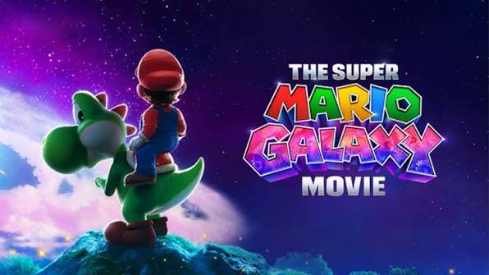
Few movies in 2026 have generated as much conversation, or as much box office cash, as The Super Mario Galaxy Movie. As the sequel to Illumination and Nintendo’s massively successful 2023 hit, this animated adventure has become the single highest-grossing film of the year so far, even as it has split critics and audiences into two very different camps.
The Story
The Super Mario Galaxy Movie sends Mario, Luigi, and Princess Peach beyond the familiar Mushroom Kingdom and out into the cosmos, drawing heavily on the beloved Super Mario Galaxy and Super Mario Galaxy 2 video games for inspiration, along with elements pulled from the Star Fox series. The plot centers on young Princess Rosalina and her infant sister Peach, who once lived together in outer space with a shared power to create nature and life. When their home comes under attack, Rosalina sends Peach to the Mushroom Kingdom for safety, where she grows up to become the kingdom’s princess, while Rosalina remains in space, eventually becoming a mother figure to the star-like Lumas aboard her Comet Observatory.
In the present day, Rosalina is kidnapped by Bowser Jr., who plans to drain her cosmic power to fuel a planet-destroying cannon built in tribute to his father, Bowser — now shrunk down and imprisoned following his defeat in the first film. Mario and Luigi, celebrated as heroes in the Mushroom Kingdom, are pulled into a new adventure across the galaxy to save Rosalina and stop Bowser Jr.’s plan.
Box Office: The Undisputed King of 2026 (So Far)
Whatever critics ultimately think of the film, there’s no denying its commercial dominance. The Super Mario Galaxy Movie opened on April 1, 2026, and quickly became a genuine box office phenomenon. As of early May 2026, the film had already grossed $405 million domestically and $495 million internationally, for a worldwide total approaching $900 million just weeks after release. Since then, it has climbed even higher, reportedly surpassing $992 million worldwide against a modest production budget of around $110 million — making it, by a wide margin, the highest-grossing movie of the year to date, ahead of major releases like Project Hail Mary and the biopic Michael.
That kind of box office performance places the film firmly in the same conversation as its predecessor, The Super Mario Bros. Movie, which grossed over $1.3 billion worldwide back in 2023 and proved that big-budget video game adaptations could be massive commercial successes when handled with care and respect for the source material.
Ratings Breakdown: A Rare Critic-Audience Split
What makes The Super Mario Galaxy Movie such an interesting case study in 2026 is the unusually wide gap between its critical and audience reception — a gap so pronounced that some outlets have called it one of the most divisive films of the year.
Critic Score: On Rotten Tomatoes, the film holds a considerably lower score than its predecessor, with roughly 42% of over 200 critics’ reviews rated positive, and an average critic rating around 5.2 out of 10. Critics have generally judged the film inferior to the 2023 original, with common complaints centering on a thinner, less emotionally grounded story.
Audience Score: Audiences have responded far more warmly. Fan reviews frequently praise the film’s nostalgic Easter eggs, vibrant visuals, and energetic voice performances, with many describing it as a joyful, replay-worthy experience for longtime fans of the Mario games. This split between lukewarm critics and enthusiastic fans has become one of the defining storylines of the film’s release.
What Critics Are Saying
Critical reviews have been consistent in praising the film’s visual achievements while criticizing its narrative depth. Multiple reviewers have called it one of Illumination’s best-looking efforts yet, describing the animation as even more visually alive than the already stunning first film, with lush skies, richly detailed textures, and dazzling depictions of alien worlds and water environments. Several critics singled out specific sequences as genuinely jaw-dropping from a pure visual standpoint.
However, that visual praise consistently comes with a caveat about story quality. One widely cited review noted that the film “sacrifices some narrative cohesion” in its rush to deliver action, jokes, and a steady stream of references to the games. Another described the story as “threadbare,” arguing that the film settles for isolated moments of visual inspiration — replicating the feeling of discovering a new world in the video games — while letting deeper characterization fall by the wayside. A review from The Hollywood Reporter suggested that adult viewers without a strong personal connection to the games would find little to hold their interest beyond the starry voice cast, while another critic noted that anyone expecting a Pixar-style story with genuine emotional development “won’t find it” here.
What Audiences Are Saying
Despite the lukewarm critical consensus, audience reaction has told a very different story. Fan reviews have praised the film’s abundance of Easter eggs and references to the wider Mario game franchise, with one popular audience review describing the film as delivering “joyful wonder” alongside a “spirited cast” that makes it an instant favorite for repeat viewings. This kind of enthusiastic, nostalgia-driven response mirrors what happened with the first Mario movie, suggesting the franchise has built an extremely loyal fan base that responds strongly to faithful references and callbacks, even when critics feel the underlying story is thin.
Family audiences in particular have responded well, with several reviews noting the film may appeal even more strongly to young children than its predecessor, thanks to its bright visuals, straightforward plot, and comedic energy.
The Voice Cast: The Film’s Biggest Strength
If there’s one element that both critics and audiences agree on, it’s the strength of the voice cast. Chris Pratt returns as Mario, alongside Anya Taylor-Joy as Princess Peach, Charlie Day as Luigi, Keegan-Michael Key as Toad, and Kevin Michael Richardson as Kamek, all reprising their roles from the first film. New additions include Brie Larson as Rosalina, Benny Safdie as Bowser Jr., Donald Glover as Yoshi, Glen Powell as Fox McCloud, and Issa Rae as the Honey Queen.
Critics have repeatedly singled out Jack Black’s return as Bowser as the standout vocal performance of the film, just as it was in the first movie, praising his comedic delivery as the primary source of laughs throughout the runtime. Reviewers have also highlighted the pairing of Black with Benny Safdie as Bowser Jr. as one of the film’s most entertaining dynamics, suggesting that even critics who were unimpressed by the plot found real enjoyment in the voice performances themselves.
The Music: Another Bright Spot
Composer Brian Tyler returns from the first film, once again collaborating with legendary Mario composer Koji Kondo to weave classic themes from the Super Mario Galaxy games, along with elements from the Star Fox series, into a score that has received largely favorable reviews in its own right. The soundtrack, released alongside the film on April 1, 2026, has been praised for successfully translating iconic video game music into a cinematic context without losing the nostalgic charm that made those original game scores so memorable to longtime fans.
Why the Critic-Audience Gap Matters
This kind of significant split between critical and audience reception raises interesting questions about how video game adaptations are reviewed and consumed. Critics, evaluating the film purely as a piece of storytelling, have generally found it lacking compared to more narratively ambitious animated films released the same year. Audiences, many of whom grew up playing the actual Super Mario Galaxy games, appear to be responding to something different entirely: the pleasure of recognition, nostalgia, and seeing beloved game worlds rendered with genuine visual craftsmanship.
This dynamic mirrors a familiar pattern in video game film adaptations more broadly, where fan service and faithfulness to source material can drive strong audience enthusiasm even when critics feel the underlying narrative doesn’t hold up on its own merits. The film’s massive box office success suggests that, at least commercially, satisfying the built-in fan base has paid off enormously, regardless of what critics ultimately conclude.
Should You Watch The Super Mario Galaxy Movie?
If you or your family have a strong personal connection to the Mario games — particularly the Galaxy titles this film draws from most heavily — this is very likely to be an enjoyable watch, filled with visual spectacle and nostalgic callbacks. If you’re looking for a tightly written, emotionally resonant animated film in the vein of the best Pixar productions, critics suggest you may want to adjust your expectations accordingly.
For families with young children, in particular, the film’s bright visuals, straightforward plot, and comedic energy make it a strong choice for a fun theater outing, even if it doesn’t reach for the same emotional depth some other 2026 animated releases have aimed for.
Where to Watch
The Super Mario Galaxy Movie is now available to stream with a Peacock subscription, and can also be rented or purchased digitally through Fandango. Given its massive theatrical run, it remains one of the most-watched movies of 2026 across both theatrical and home viewing.
How It Compares to Other 2026 Animated Releases
2026 has been a competitive year for animated films, with releases like Toy Story 5 and the original comedy Hoppers also drawing major audiences. Compared to those films, The Super Mario Galaxy Movie stands apart specifically because of how directly it leans into pre-existing fan nostalgia rather than original storytelling. Toy Story 5 and Hoppers have both earned stronger overall critical reception by pairing their visual craft with more emotionally resonant, character-driven stories. The Super Mario Galaxy Movie, by contrast, has leaned almost entirely into spectacle and franchise recognition — a strategy that has clearly worked from a box office standpoint, even if it hasn’t translated into the same level of critical acclaim.
This contrast highlights an interesting trend in this year’s animated movie slate: original stories and beloved legacy sequels are succeeding through very different paths. While Hoppers has earned praise for taking creative risks with new material, The Super Mario Galaxy Movie has succeeded by doubling down on exactly what its built-in fan base already loves, prioritizing familiar faces, callbacks, and video-game-accurate visuals over narrative innovation.
What This Means for Future Mario Movies
Given the film’s massive box office success, a third installment in the Illumination/Nintendo Mario film series seems all but inevitable, even with the more mixed critical reception this time around. Studios have historically prioritized box office performance over critical consensus when greenlighting sequels, and few films in 2026 have demonstrated commercial strength on the level The Super Mario Galaxy Movie has shown.
If a third film does move forward, the critical response to this installment may push the creative team to focus more heavily on strengthening the story and character work next time, especially since so many reviews have praised the visuals and voice cast while specifically flagging narrative thinness as the film’s biggest weakness. Whether that adjustment happens will be one of the more interesting storylines to watch as the franchise’s next chapter develops.
Final Verdict
The Super Mario Galaxy Movie is a fascinating case of a film succeeding wildly with audiences and at the box office while leaving critics considerably more divided. Its stunning visuals and beloved voice cast — particularly Jack Black’s Bowser — make it worth watching for fans of the franchise, even if the story itself doesn’t reach the heights of its predecessor.